What Should the Ingredient List Say for Real CBD Oil?
A CBD oil label should make it easy to answer three basic questions: What is in the bottle? How much CBD is in it? And can the product’s contents be checked against a report for that exact batch? If you have to guess, or the package makes big promises but gives few details, slow down before buying.
“CBD oil” is often a tincture: a hemp extract blended with a carrier oil, such as olive oil or MCT oil. But the phrase alone doesn’t tell you whether the product contains CBD, how much it contains, or whether the oil is made from hemp extract at all. Read the ingredient list alongside the Supplement Facts or product facts panel, and look for a batch-specific lab report.
This guide explains the label details worth checking, including the difference between milligrams per bottle and per serving, what “total cannabinoids” means, and why hemp seed oil is not the same thing as CBD oil.
Start With the Actual Ingredients
A typical CBD tincture has two main components: a hemp-derived extract and a carrier oil. The ingredient list should name them clearly. For example, a label might list “hemp extract” and “organic MCT oil.” It may also identify a flavor or other ingredient, such as peppermint oil. If the product is flavored, check that the flavoring is disclosed rather than hidden behind vague wording.
Ingredient terminology varies, and a single phrase is not proof of quality. “Hemp extract,” “phytocannabinoid extract,” and “aerial parts hemp” may appear on labels or in product descriptions, but those words do not, by themselves, tell you how much CBD the bottle contains. Look for a separate, specific CBD amount and a lab report that supports it.

What does “aerial parts hemp” mean?
“Aerial parts” refers to the parts of the hemp plant that grow above ground, such as the flowers, leaves, and stems. A label or description may use this phrase to identify the source of an extract. It is more informative than simply saying “hemp,” but it still does not establish the extract’s cannabinoid profile or potency. Those details should be disclosed elsewhere on the package or in the product’s documentation.
Look for a named carrier oil
The carrier oil helps dilute the extract and makes the tincture easier to measure and use. Common carriers include MCT oil, olive oil, and hemp seed oil. Seeing hemp seed oil on an ingredient list is not automatically a problem: it can be a legitimate carrier. The important question is whether the product also contains a clearly identified CBD or hemp extract.
Hemp Seed Oil Is Not the Same as CBD Oil
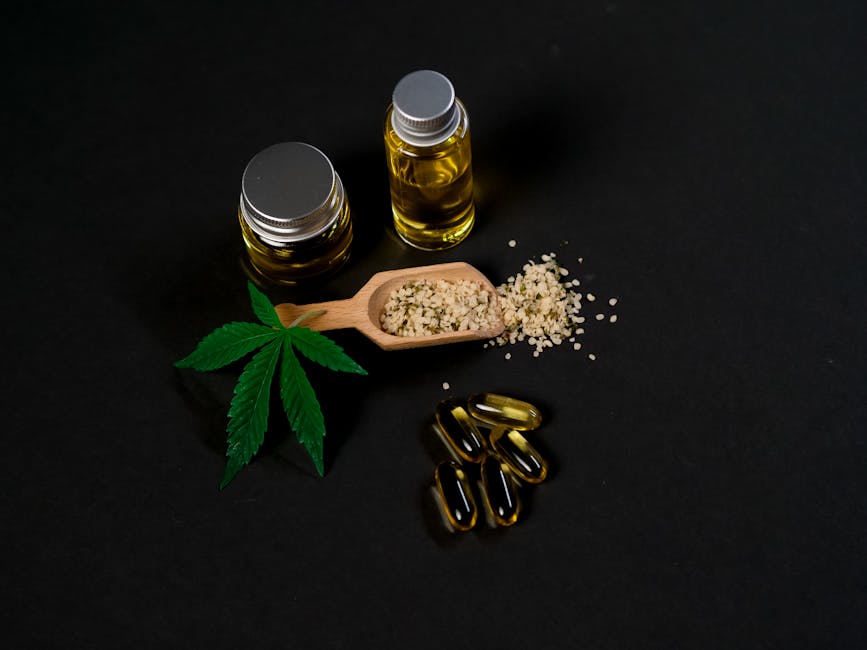
Hemp seed oil is pressed from hemp seeds. CBD is primarily associated with extracts made from other parts of the hemp plant. Hemp seed oil can be a useful food ingredient, but it should not be mistaken for a source of meaningful CBD.
This distinction matters because “hemp oil” can be used loosely in product names and marketing. A bottle labeled “hemp oil” might contain hemp seed oil without a CBD extract. Check the ingredient list and the CBD amount, not just the front label or a picture of a hemp leaf.
- Hemp seed oil alone: A seed oil ingredient; it does not establish that the product contains CBD.
- Hemp extract: A broad ingredient description that may refer to an extract containing CBD and other hemp compounds. Check the stated CBD amount and lab report.
- CBD or cannabidiol: A specific cannabinoid. A clear label should tell you how many milligrams are in the bottle or serving.
Be cautious if a product prominently advertises “hemp oil” but never gives a CBD amount, or if the ingredient list names only hemp seed oil. That doesn’t prove the product is unsafe; it does mean you should not assume it is a CBD tincture.
Check Milligrams Per Bottle and Per Serving
One of the most common label-reading mistakes is confusing the total CBD in the bottle with the amount in one serving. A bottle might contain 1,000 milligrams of CBD overall, but a dropperful—or another labeled serving—contains only part of that total.
For example, a 1,000 milligram tincture in a one ounce bottle is roughly 30 servings, about 33 milligrams per serving, if the serving size is 1 milliliter and the bottle contains approximately 30 milliliters. The exact serving amount depends on the product’s stated serving size and fill volume. A dropper is not automatically a serving, so check the directions and Supplement Facts panel.
Label detail What it tells you What to check Total CBD per bottle The amount of CBD in the full container Is the number clearly identified as CBD, rather than only total cannabinoids? CBD per serving The amount in the labeled serving size Does the serving size appear in milliliters or another measurable unit? Servings per container How many labeled servings the bottle contains Does the count make sense given the bottle volume and serving size?For a quick check, divide the stated CBD per bottle by the number of servings. If the numbers don’t line up, look for an explanation on the label or ask the company. Don’t assume “1,000 mg” means 1,000 mg in every dropperful.
“Total Cannabinoids” Is Not a CBD Number
Some labels state “total cannabinoids” prominently but do not say how much of that total is CBD. Total cannabinoids can include CBD and other cannabinoids. It does not tell you the CBD amount unless the label breaks that amount out separately.
Look for a clear CBD figure, expressed in milligrams per container and, ideally, per serving. Then compare those claims with the certificate of analysis, or COA—the laboratory report for the product. A COA may list individual cannabinoids, including CBD, and show measured amounts for the tested sample.
If the package gives only “total cannabinoids” and no CBD number, treat that as a reason to ask questions. A label phrase that sounds scientific is not a substitute for a specific amount you can verify.
Understand Full Spectrum, Broad Spectrum, and Isolate
These terms describe the intended composition of a hemp extract. They are useful shorthand, but they are not a guarantee of a particular potency or a substitute for reading the lab report. Definitions and labeling practices can vary, so check what the company says the product contains and what its COA shows.
- Full spectrum: Generally refers to an extract intended to retain CBD and other naturally occurring hemp compounds, potentially including THC. Check the COA for the reported THC content, and consider applicable laws and personal circumstances.
- Broad spectrum: Generally refers to an extract with multiple hemp compounds, with THC removed or reduced. Do not assume “broad spectrum” means absolutely zero THC; verify what the lab report detects and how the company defines the term.
- CBD isolate: Typically refers to a product made with isolated CBD rather than a broader range of hemp cannabinoids. Check the ingredient list and COA to see whether other cannabinoids are detected.
A product description may call an extract a phytocannabinoid extract, but that phrase alone does not tell you whether it is full spectrum, broad spectrum, or isolate. Look for the product type, the listed CBD amount, and test results for the individual cannabinoids.
Use the QR Code—and Match the Batch
A QR code on packaging can be a convenient way to access a lab report document. The useful version takes you directly to the COA for the product and batch in your hand. A QR code that leads only to a homepage, a general marketing page, or an undifferentiated list of reports makes verification harder.
Also compare the report’s batch or lot number with the number printed on the bottle or box. A company should have a batch/lot number matching system that lets you connect the product to its test results. If the numbers do not match—or the report has no identifiable batch details—contact the company before relying on it.
- Find the batch or lot number on the package.
- Scan the QR code or visit the company’s lab-report page.
- Open the lab report document and confirm that its batch or lot number matches the package.
- Check the reported CBD amount and other cannabinoids against the product’s claims.
- Look for the testing laboratory, test date, and results for contaminants such as heavy metals, pesticides, and residual solvents, where applicable.
A COA is a useful piece of evidence, not a guarantee that a product is right for you or that every claim is true. It should be legible, tied to the product’s batch, and specific enough to assess the claimed contents.
Read the Label, Not Just the Marketing
Retailers and publishers may explain how to interpret CBD labels, but the product details still need to stand on their own. For instance, a consumer-health article from The Daily News (thedailynewsonline.com), an audio version produced with Trinity Audio, or an educational page from a retailer such as Joy Organics can help readers encounter label guidance in different formats. None of those names replaces checking the bottle’s ingredient list and matching COA yourself.
Keep an eye out for claims that promise to treat, cure, or prevent a disease. Medical promises on a package are a reason to be cautious, not proof that a product works. CBD may also interact with medicines, so speak with a qualified health professional if you use medication, have a health condition, or are considering CBD during pregnancy or breastfeeding.
Compare Value Carefully
Price can help you compare products, but only after you confirm what the bottle contains. To calculate price per milligram, divide the bottle’s price by its stated milligrams of CBD—not by total cannabinoids unless you are intentionally comparing that broader figure. For example, a $50 bottle labeled as containing 1,000 milligrams of CBD costs 5 cents per milligram ($50 ÷ 1,000). That calculation is only useful if the CBD amount is clearly disclosed and supported by the product documentation.
Use the same approach when comparing serving costs: divide the price by the number of labeled servings. A low price per bottle may not be a good value if each serving contains much less CBD than another product’s serving. And a high CBD number on the front label should not distract from missing ingredient details, vague potency claims, or a COA that cannot be matched to the bottle.
A Quick CBD Oil Label Checklist
- The ingredient list names a hemp extract or other CBD source, as well as the carrier oil and any flavorings.
- The label states the CBD amount per bottle—not just “hemp oil” or “total cannabinoids.”
- The serving size and CBD per serving are clear and make sense alongside the bottle volume.
- The product’s full spectrum, broad spectrum, or isolate description is supported by the cannabinoid information.
- A QR code on packaging links to a lab report document, rather than only a general homepage.
- The COA’s batch or lot number matches the package through a batch/lot number matching system.
- The report provides useful cannabinoid results and relevant contaminant testing.
- The package avoids unsupported medical promises.
A straightforward CBD oil label should tell you what ingredients are in the bottle, how much CBD you are getting, and how to check the test report for that specific batch. If those https://www.thedailynewsonline.com/sponsored/how-to-read-a-cbd-label-without-getting-fooled/article_f6fd319b-cc89-4798-9957-bf218c7f9e1c.html basics are missing, don’t let polished branding—or a long list of impressive-sounding hemp terms—fill in the gaps. Ask the seller for clear answers, and choose a product whose claims you can actually verify.