Forbes Health CBD Survey 2023: What Were the Top Reasons People Tried CBD?
The top reasons people tried CBD in the Forbes Health CBD survey 2023 were pain, anxiety and sleep. That ranking offers a useful snapshot of how CBD moved into everyday wellness conversations—but it is not proof that CBD reliably treats any of those concerns.
CBD, short for cannabidiol, is a compound found in cannabis plants. Unlike THC, it is not intoxicating, but some CBD products can contain THC. That distinction matters if you are shopping for CBD for sleep or CBD for anxiety, especially if you face workplace drug testing, take prescription medicines or want to avoid THC altogether.
One practical limitation: a scraped version of the Forbes Health article reviewed for this post did not include product prices. So this article does not attach prices to particular products or treat the survey as a shopping guide. Prices vary by product, dose and retailer—and a low price alone says little about quality.
What the survey says—and what it cannot tell us
Forbes Health’s 2023 survey coverage points to three leading reasons respondents tried CBD: pain, anxiety and sleep. These categories are easy to understand: people may be looking for relief from everyday discomfort, help winding down or a better night’s rest. But a survey records what people report doing; it does not establish that CBD caused an improvement.
That distinction is worth keeping in mind. A person might try CBD for anxiety and feel better, but a survey cannot separate the product’s effects from expectations, other changes in that person’s routine or the natural ups and downs of symptoms. Nor does a popular reason for trying CBD mean there is strong clinical evidence for that use.
Reason people tried CBD What to keep in mind Pain Reports of use are not proof that a CBD product treats a particular cause of pain. Anxiety Research is still developing; CBD products should not replace prescribed care without a clinician’s guidance. Sleep Sleep problems can have many causes, and evidence for over-the-counter CBD products is limited.The survey also should not be mistaken for a test of a specific brand, formulation or dose. “CBD” on a label can refer to products with very different ingredients and amounts. A tincture, gummy, capsule and topical product may not deliver CBD in the same way.
Why CBD became more mainstream after the 2018 Farm Bill
The 2018 Farm Bill changed federal law around hemp by removing hemp from the federal list of controlled substances, provided it meets the legal definition, including a limit of no more than 0.3% delta-9 THC by dry weight. That change helped expand the legal market for hemp-derived CBD products in many parts of the country.
It did not make every CBD product FDA-approved, guarantee that every product is legal in every situation, or confirm that a product is safe and effective for a particular condition. The FDA has approved a prescription CBD medicine for certain seizure disorders, but that is not the same as approving the CBD oils and gummies sold as general wellness products.
More retail visibility also means more variation in product quality. Labels, ingredient lists and testing practices can differ from one company to another. For consumers, the useful question is not just “Does this say CBD?” but “What is in this batch, and what evidence can the seller show me?”

Full-spectrum, broad-spectrum and isolate: a plain-language guide
These terms describe the types of cannabis-plant compounds a product is intended to contain. Definitions can vary by brand, so check the product’s lab report rather than relying on the label alone.
- Full-spectrum CBD is intended to contain CBD along with other plant compounds, and it may contain THC. A product can meet the federal hemp threshold and still contain some THC.
- Broad-spectrum CBD is intended to include CBD and other plant compounds while removing THC. “THC-free” on a label is not enough by itself to prove that no THC was detected in a particular batch.
- CBD isolate is intended to contain CBD alone, rather than a broader mix of cannabis compounds. Its actual contents still depend on manufacturing and testing.
The entourage effect, simply explained
The entourage effect is the idea that cannabis compounds may work differently together than they do alone. In practical terms, it is a proposed reason someone might choose a full- or broad-spectrum product over an isolate. It is not a guarantee of better results, and it does not establish that a multi-compound product will help with sleep, anxiety or pain.
For a consumer, the trade-off is straightforward: a product with more plant compounds may also have a greater chance of containing THC, https://smoothdecorator.com/what-quality-signals-should-i-look-for-when-buying-thc-free-cbd-online/ depending on its formulation and testing. If avoiding THC is important, choose based on clear batch documentation—not on a general promise about the entourage effect.
“THC-free” and drug testing: the part labels can gloss over
People often look for THC-free CBD because they are concerned about impairment or workplace testing. The concern is reasonable. A drug test generally looks for evidence of THC exposure, not whether someone intended to buy a THC-free product. Some CBD products may contain small amounts of THC, and inaccurate labeling or cross-contamination can add uncertainty.
A “THC-free” claim should be backed by a batch-specific certificate of analysis (COA). A COA is a lab report that identifies what was tested and lists measured results. Batch-specific means the report is tied to the same production batch as the product being sold—not simply a sample from another run or a generic report on the company website.
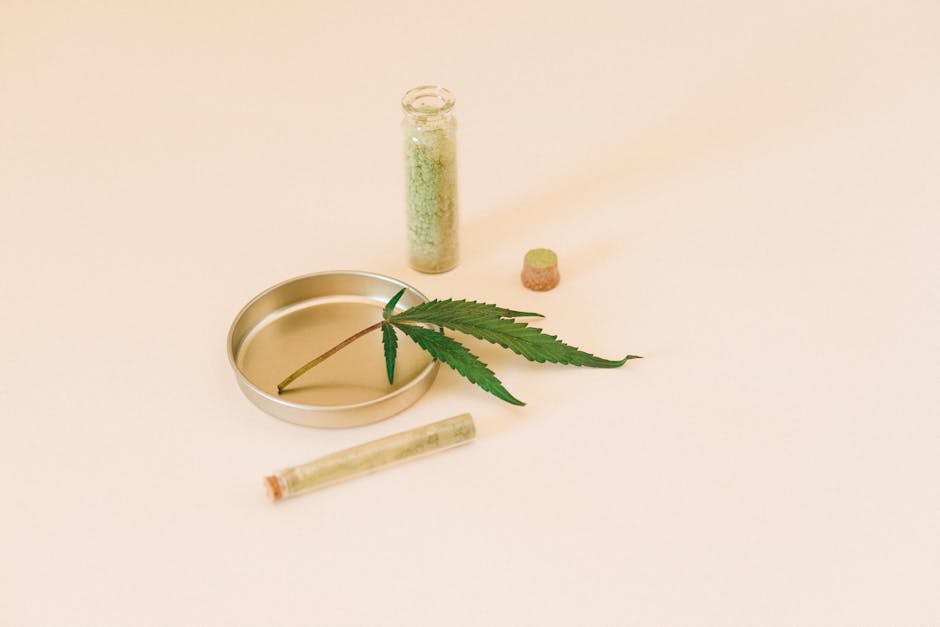
Even a report showing THC as “not detected” does not guarantee that using the product carries zero drug-testing risk. Labs have detection limits, and products can vary. Anyone subject to testing should consider avoiding CBD products that could contain THC and ask their employer or testing administrator about its policies. A clinician or pharmacist can help weigh health questions, but cannot promise a negative test result.
How to check a COA and the company’s testing steps
A useful COA should be readable, current enough to match the product, and linked to the batch number on the package. It should come from an independent laboratory, not only from the manufacturer’s own quality team. Look for results that cover CBD and THC content and, where applicable, contaminants such as pesticides, heavy metals, residual solvents and microbes.. Exactly.
Testing is one part of quality control. Refinement means the processing steps used to turn plant material into an ingredient or finished product—for example, extracting oil and removing unwanted materials or compounds. Refinement can affect what remains in the product, but a company’s description of its process is not a substitute for testing the finished batch.
Before buying, use this short checklist:
- Match the package’s batch or lot number to the COA.
- Check that the report names the laboratory and provides actual results, not just a “pass” badge.
- Confirm which cannabinoids were tested, including THC, and note any detection limits.
- Look for contaminant testing and a clear date for the report.
- Compare the COA’s CBD amount with the amount stated on the label.
- Ask the company to explain its extraction and refinement steps if those details are missing.
If the seller cannot provide a report for the batch in hand, treat its potency and THC claims cautiously. A QR code can be convenient, but it is only useful if it leads to the right document.
CBD for sleep and CBD for anxiety: what shoppers should know
The survey’s sleep and anxiety findings describe consumer interest, not a treatment recommendation. Research on CBD for these concerns is ongoing, and results from a study using a specific product or dose may not apply to an over-the-counter gummy or oil. The dose on a label is also not a personal dosing recommendation.
CBD can interact with some medicines, and it may cause side effects such as tiredness, diarrhea or changes in appetite. It can also affect how the body processes certain drugs. If you take prescription medicine, have a health condition, are pregnant or breastfeeding, or are considering CBD for a persistent https://highstylife.com/tested-athlete-cbd-choices-broad-spectrum-vs-isolate/ sleep or anxiety problem, talk with a health professional first. Do not stop or change prescribed treatment on your own.
For sleep, it may help to look beyond a supplement: pain, stress, medication effects and sleep disorders can all disrupt rest. For anxiety, persistent or worsening symptoms deserve appropriate care. CBD should not be presented as a replacement for that care.
What the missing prices mean for shoppers
Because the scraped Forbes article version did not list product prices, readers should not infer that one CBD type is cheaper, better value or more effective than another from the survey. If you compare products, calculate the cost per serving only after checking the amount of CBD per serving—and verify that the product’s COA corresponds to its batch.
Price comparisons can also be misleading when products differ in serving size, concentration, ingredients or testing. A bargain is less useful if the label is unclear or the seller cannot show a reliable lab report. Conversely, a higher price does not prove a product is cleaner or more effective.
The bottom line
The Forbes Health CBD survey 2023 reflects the reasons people commonly turned to CBD: pain, anxiety and sleep. That popularity helps explain CBD’s place in mainstream wellness after the 2018 Farm Bill, but it is not clinical proof that CBD treats those concerns.
If you decide to shop, understand whether you are considering full-spectrum, broad-spectrum or isolate; be realistic about the proposed entourage effect; and take THC exposure seriously if you face drug testing. Most of all, look for a batch-specific COA and clear information about lab testing and refinement. If those basics are missing, the label is asking you to trust more than it has shown.